InfraNet: Real-time Wildlife Detection from Thermal Imagery
Thermal elephant detection and edge deployment for human-wildlife conflict mitigation
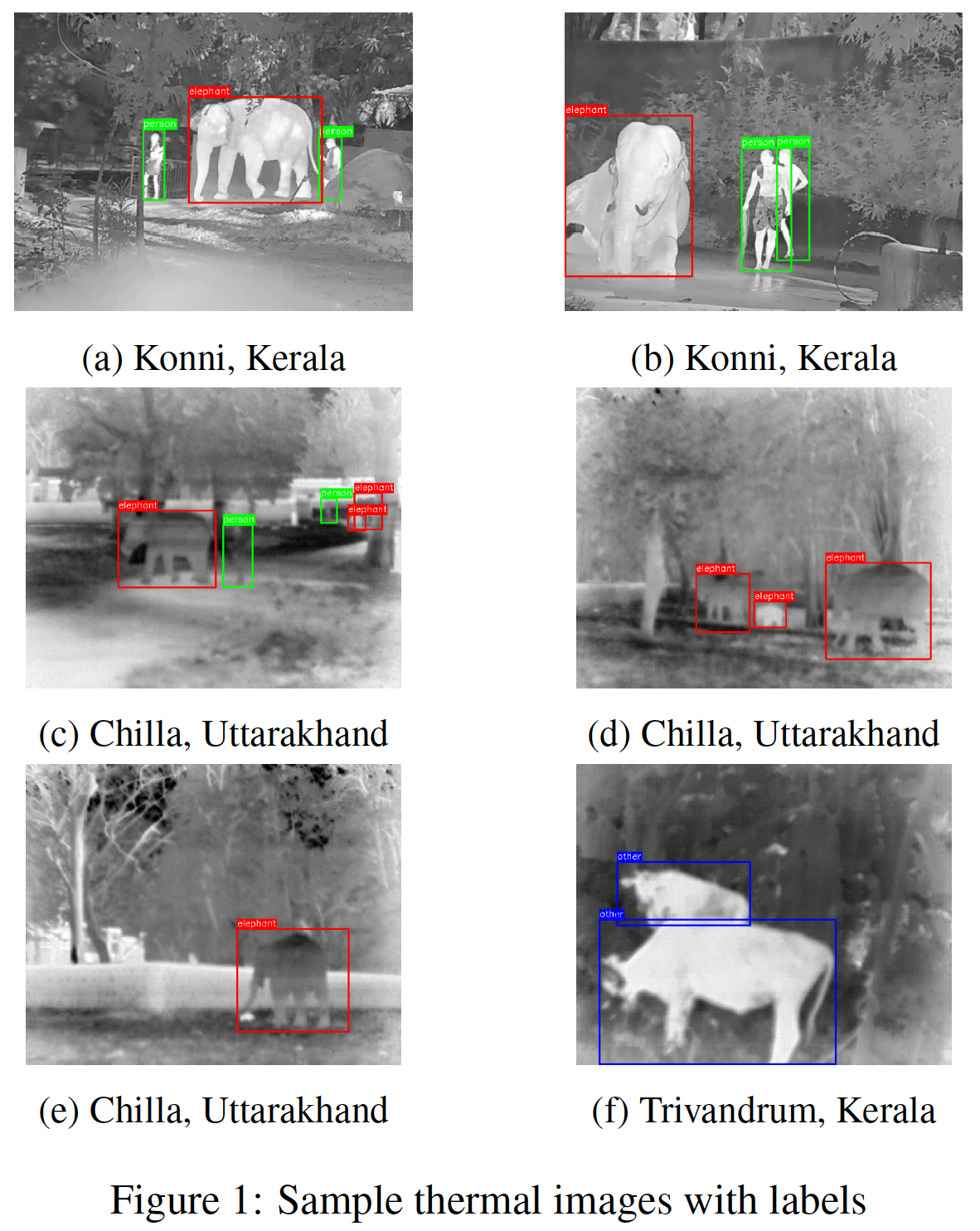
InfraNet studies wildlife detection in thermal imagery, with elephant detection as the central safety-critical case. The motivation is practical: thermal cameras can operate when visible-light imagery is unreliable, but field footage introduces noise, contrast variation, and domain shifts that can hurt recall.
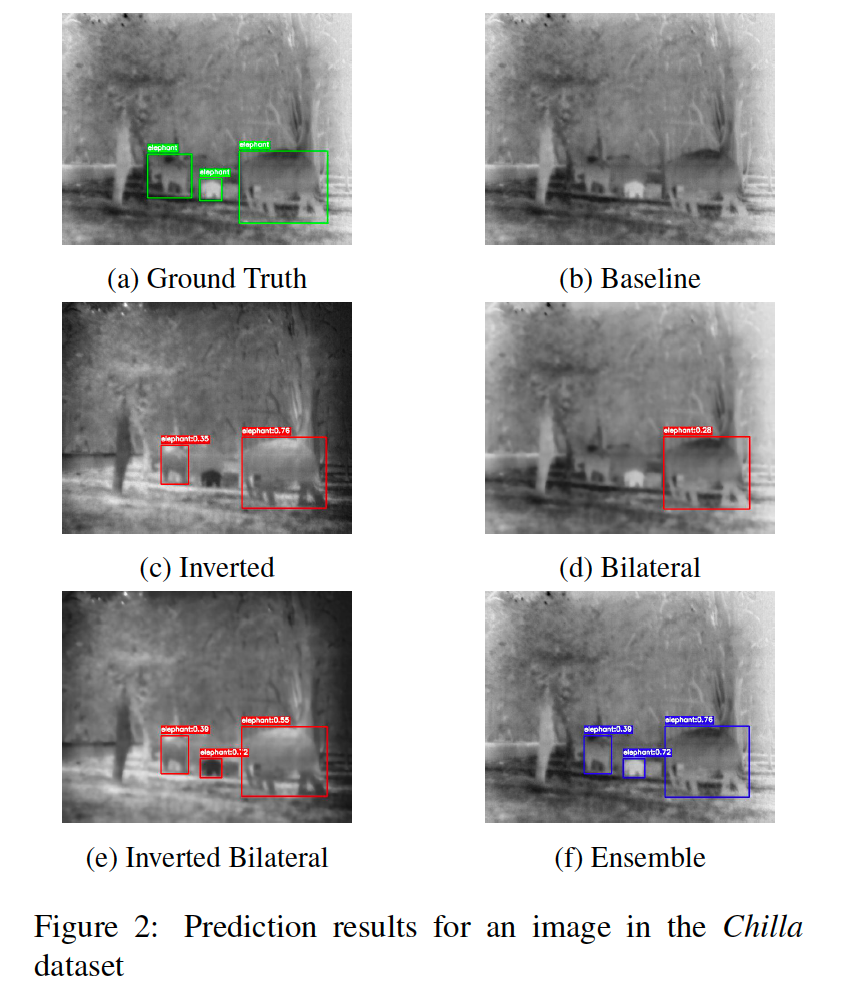
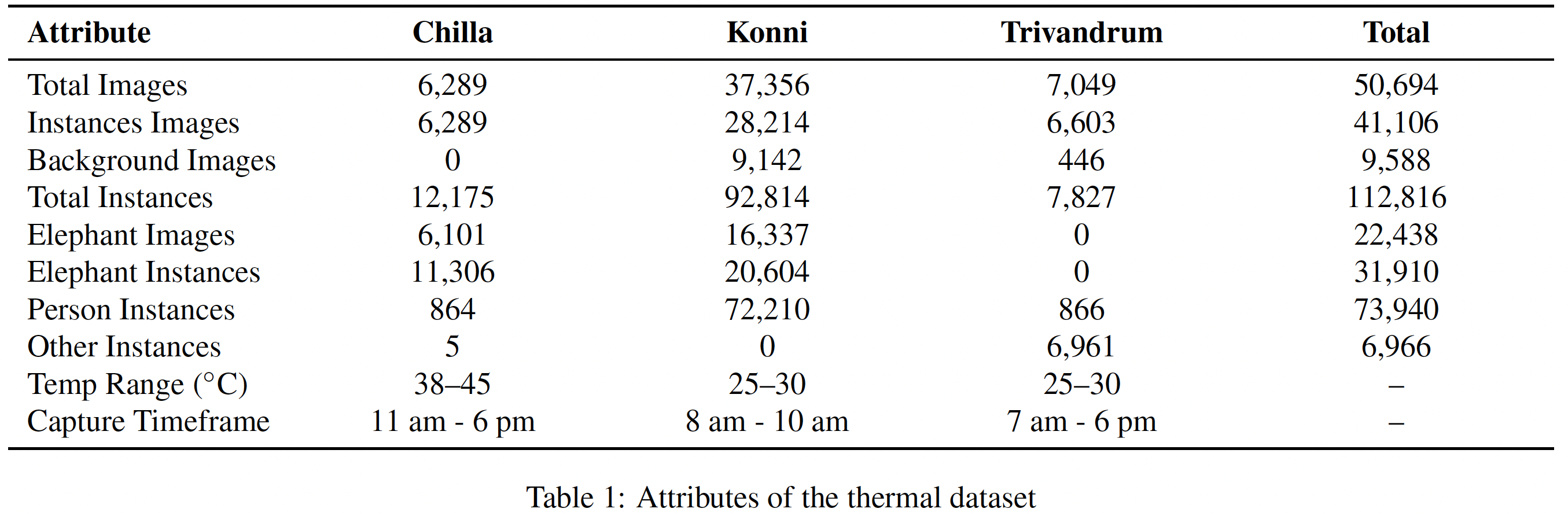
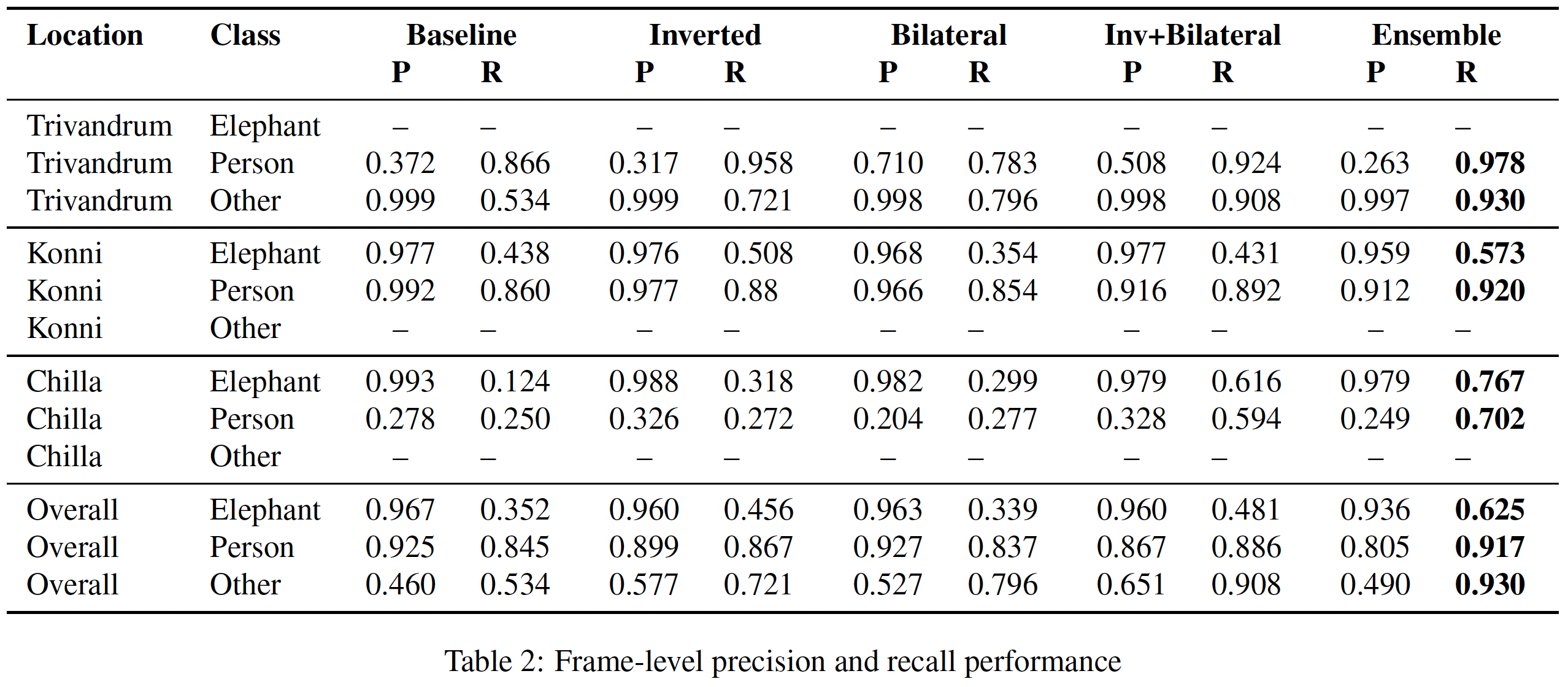
I worked with a 50,694-frame annotated dataset covering humans, elephants, and other animals. Fine-tuning pretrained YOLO models directly on the raw thermal frames exposed poor recall in some test locations, so I evaluated preprocessing strategies before detection. Inversion helped contrast, bilateral filtering reduced noise while retaining edges, and combining several preprocessed views gave the model a broader signal than a single thermal rendering.
The final ensemble used four preprocessed variants with a lightweight pretrained detector and improved elephant recall from 0.35 to 0.62. The goal was not only higher recall, but a practical balance between detection quality and inference speed for real-time deployment.
Read the published paper PDF, view the IEEE Xplore record, or browse the implementation in the infrared repository.
.